Indian-American Republican Governor of Louisiana, Bobby Jindal, has announced that he will not run for Presidency in 2012.
"I am not running for President of the United States. I've got the job I want," he said, while hosting the Southern Republican Leadership Conference which was attended by leaders like Sarah Palin.
Former Vice Presidential candidate Palin is among the many potential Republican contenders to challenge President Barack Obama in 2012.
"We (Republicans) may not be able to take away their (Democrats') arrogance, but in November, we can take away their power," Jindal said in New Orleans.
Louisiana Republican leaders say regardless of who comes out on top on 2012, New Orleans is already a big winner for hosting the conference.
Sunday, April 11, 2010

Wednesday, March 31, 2010
Ukrainian authorities allowsUPA on Victory day parade
Ukrainian authorities will not ban Victory Day parades by veterans of the Ukrainian Insurgent Army (UPA), which fought on the side of the Nazis in World War II, a deputy prime minister said on Wednesday.The UPA fought against the Soviet Army during World War II. Following the invasion of German troops in the summer of 1941, one of its leaders, Stepan Bandera, called on Ukrainians "to help the German army in the fight against Moscow and Bolshevism."
"I think such parades will take place in western regions. We will not ban anything," Volodymyr Seminozhenko said.He said the government's policy was the start of creating an atmosphere of tolerance in the country. "We will see to it that there are no excesses," the deputy prime minister added.
Ukrainian President Viktor Yanukovych has said the controversy over his predecessor's naming Bandera a national hero will be settled before this year's Victory Day, marked on May 9.
Former President Viktor Yushchenko, known for his promotion of Ukrainian nationalism, often at the expense of relations with Russia, bestowed the honorary title of Hero of Ukraine on Bandera in late January.
The Soviet authorities accused Bandera, who fought both the Nazis and the Soviets in his quest for an independent Ukraine, of numerous acts of murder and terrorism. He was assassinated by the KGB in Munich, Germany, on October 15, 1959.
KIEV, March 31 (RIA Novosti)
"I think such parades will take place in western regions. We will not ban anything," Volodymyr Seminozhenko said.He said the government's policy was the start of creating an atmosphere of tolerance in the country. "We will see to it that there are no excesses," the deputy prime minister added.
Ukrainian President Viktor Yanukovych has said the controversy over his predecessor's naming Bandera a national hero will be settled before this year's Victory Day, marked on May 9.
Former President Viktor Yushchenko, known for his promotion of Ukrainian nationalism, often at the expense of relations with Russia, bestowed the honorary title of Hero of Ukraine on Bandera in late January.
The Soviet authorities accused Bandera, who fought both the Nazis and the Soviets in his quest for an independent Ukraine, of numerous acts of murder and terrorism. He was assassinated by the KGB in Munich, Germany, on October 15, 1959.
KIEV, March 31 (RIA Novosti)
Monday, March 29, 2010
Obama pays surprise visit to Afghanistan
US President Barack Obama paid a surprise visit to Kabul yesterday where he met Afghan President Hamid Karzai and spoke to American troops, saying difficult days lie ahead in the bloody eight-year-old war. The visit, which came three months after he ordered a surge of 30,000 troops, was shrouded in secrecy for security reasons.
During his meeting with Mr Karzai, Mr Obama put across the urgency to crack down on corruption, and make a concerted effort in improving the judicial system and governance.
Later addressing about 2500 US forces, Mr Obama said difficult days lie ahead in the 8-year-old war. He also said that there will be "setbacks" but the US will not quit and will prevail. The US President has left Afghanistan flying back home aboard Air Force One.
During his meeting with Mr Karzai, Mr Obama put across the urgency to crack down on corruption, and make a concerted effort in improving the judicial system and governance.
Later addressing about 2500 US forces, Mr Obama said difficult days lie ahead in the 8-year-old war. He also said that there will be "setbacks" but the US will not quit and will prevail. The US President has left Afghanistan flying back home aboard Air Force One.
Monday, March 22, 2010
Iraqi PM Nuri al-Maliki wins
Iraqi Prime Minister Nuri al-Maliki retained his narrow lead over secularist challenger Iyad Allawi on Thursday as Iraq neared a final preliminary count of votes cast in a 7th March parliamentary election.Race between the Shi'ite prime minister and Allawi, who was dominating largely Sunni provinces, was expected to lead to weeks or months of tense negotiations to form a new government as Iraq emerges from years of sectarian conflict.The strong showing by Allawi among Sunnis marginalised by the rise of Iraq's Shi'ite majority after the 2003 US invasion promised to be a key factor in the coming talks and in Iraq's security as US forces prepared to pull out by the end of 2011.With nearly 90 per cent of the vote tallied, Maliki's State of Law coalition was about 40,000 votes ahead of Iraqiya, the cross-sectarian bloc headed by Allawi, who served as prime minister in 2004 and 2005.
Maliki's group was ahead in seven provinces compared to five for Iraqiya, and three each for the next two challengers, the Shi'ite Iraqi National Alliance (INA) and the bloc representing the two most powerful parties from Iraq's Kurdish north.
Maliki's group was ahead in seven provinces compared to five for Iraqiya, and three each for the next two challengers, the Shi'ite Iraqi National Alliance (INA) and the bloc representing the two most powerful parties from Iraq's Kurdish north.
Friday, March 19, 2010
The failures of Nigerian democracy
The failures of Nigerian democracy
Moses Ochonu
2010-03-18, Issue 474
http://pambazuka.org/en/category/features/
There’s an assumption that despite multiple deprivations, Nigerians can ‘take solace in the knowledge’ that they have democracy, writes Moses Ochonu. But the kind of democracy practised by Abuja has delivered neither improved standards of living nor abstract benefits such as press freedom or human rights, instead providing the perfect cover for ‘massive corruption’, says Ochonu. It is ‘not what Nigerians signed up for in 1999; if we do not act urgently, it will consume us all,’ Ochonu warns.
I have sensed a disturbing complacency in our politicians and intellectuals as they try to enunciate democracy for the rest of us. They assume erroneously that democracy is its own justification – that simply being baptised with the moniker of democracy is sufficient. And that Nigerians, dispossessed they may be, will be satisfied with a political concept that, as currently practiced in Nigeria, stands empty of its substantive content.
This tragic misunderstanding troubles me personally because the assumption is that even as Nigerians groan under the weight of multiple deprivations, we can take solace in the knowledge that we have democracy and that democracy will soothe our pain. How wrong! The proper retort should be a classic Nigerian putdown: Na democracy we go chop? But let’s not trivialise an important issue.
My good friend, Ikhide Ikheloa, a literary critic and Next columnist, has been on a personal mission. His aim: To orchestrate the demise of our current ‘democracy’. He is so convinced that democracy is a mortal danger to Nigerians that he equates its dissolution to an epic struggle for political liberation; liberation from predation and legalised ‘democratic’ oppression.
For Ikhide, democracy has, far from doing Nigeria good, set the country back decades and provided a perfect alibi for the political class to bankrupt and bury the country once and for all. Tough words, but those who know Ikhide know that he can be unapologetically melodramatic and passionate in expressing his opinions.
Melodrama aside, what Ikhide is saying is the stuff of dinner table discussions and long-distance telephone and email conversations among Nigerians at home and abroad. Stripped of all provocative linguistic devices, what Ikhide is advancing is pretty basic: The democracy practised by Abuja is fractured beyond recognition; it is not what Nigerians signed up for in 1999; if we do not act urgently, it will consume us all.
Let me break it down through a process of crude itemisation:
A. The material promise of democracy, that is, the supposed correlation between democracy and improved standards of living, has yet to materialise for Nigerians in almost eleven unbroken years of ‘democracy’.
B. Even advertised abstract benefits like press freedom, human rights, the right to free political choice, and the right to make deliberative input in governance have all been denied Nigerians under this democracy. While we saw flickers of these benefits in the wake of military disengagement in 1999, today’s ‘democratic’ environment resembles the regimented, freedom-less days of military rule.
C. ‘Democracy’ has provided the perfect cover for corruption – massive corruption. ‘Democracy’ has – forgive the redundancy – democratised corruption. Under the military, corruption was a quasi-monopoly; it was tightly controlled by a small cohort. Under our ‘democracy,’ the need to cultivate political support and immunity means that the loot has to circulate. Democracy has also made corruption legitimate. In the days of the military, the zones of legal and illegal monetary appropriation were clearly demarcated, so we could tell easily when an act of corrupt self-enrichment had occurred. Not any more. Under our current ‘democratic’ practice, public officials steal legally. They only have to underwrite what they steal as a licit item in the budget bill. This can be done in a few choreographed, taxpayer-funded committee sittings and a hurried process of debate-less approval. Political office holders can even steal in anticipation, carefully documenting future thefts and including them as budgetary earmarks or exculpatory footnotes in legislations. And it’s all legal – and perfectly within the procedural norms of our ‘democracy.’ Where the law did not exist to legitimise the theft, our legislators have enacted or been goaded by executive carrots and sticks into enacting one-off bills to authorise acts of pillage deemed in the pecuniary interest of legislators and their executive partners. Democracy has licensed and unleashed novel evils on our country. Consider this: The Borno State House of Assembly recently passed a bill awarding stupendous severance perks worth tens of millions of naira annually to the governor and his deputy – for life! And it’s all legal and within the rules of our ‘democracy.’
D. The bill for this destructive ‘democracy’ is now being paid in the life and limbs of Nigerians. I’ll explain. A recent report confirmed what many Nigerians have suspected all along: Nigerian public office holders at all levels are the highest paid in the world. Together with their string of assistants and advisors (who also have their own paid advisors), our public officers gobble up at least half of our revenue and budgetary appropriations in legitimate rewards. And we have not accounted for the unbridled stealing that is now a legitimised staple of our patrimonial politics. Add that to the math and we may be talking of seventy percent of our revenue being spent on the maintenance of our ‘democratic’ personnel – on running our ‘democracy.’ This prohibitive overhead has left us with a smaller pool of funds than ever to invest in the things that matter to Nigerians: Roads, healthcare, school, water, electricity, and food. This odd financial state of low return on ‘democratic’ investment is unsustainable. Something has to give.
E. This ‘democracy’ has intensified our ethno-regional bickering while bequeathing an unfolding legacy of costly national political gridlocks. The quagmire occasioned by Yar’Adua’s health crisis is a perfect illustration. Try quantifying the financial and political cost of this long-running farce and you’ll see how expensive ‘democracy’ really is. A few weeks ago, the country teetered precariously because the ritualistic niceties of democracy stood in the way of pragmatic, decisive, patriotic action. This preference for process over productive outcomes is one reason why democracy is losing its appeal with many Nigerians. Most of our gridlocks are resolved quicker than the current one and at less political cost, but that is not much comfort either. For when routine political disagreements are settled, they often involve Ghana-must-go political solutions that are just as costly to Nigerians as prolonged impasses.
F. Elected officials often do not play by the rules that brought them to power; they seek instead to subvert laws and constitutions to secure longer tenures. Think Obasanjo, but also think Mamadou Tandja, Yahyah Jammeh, Yoweri Museveni, and many other African leaders whose fickle commitment to democracy has led them into tenure-extending adventures that have thrown their countries into costly political crises. The irritant for many Nigerians is that ‘democracy’ has been reduced in practice to – and accepted as being constituted by – only one of its many elements: †he ritualistic conduct of periodic, incumbent-rigged elections. Every other hyped benefit of democracy has eluded Nigerians.
G. In this ‘democracy’ every government action is conceived through the lens of politics, not of patriotism. Instead of asking if a policy or initiative is good for the Nigerian people elected officials ask if it would look good politically. Instead of asking how a policy might help Nigerians, officials ask how it would win them the next elections – how it would enrich campaign donors and party godfathers and how much it would generate for the election war chest. This permanent campaign culture is a costly drawback of democracy and has reached a head in the United States, the prototypical practitioner of the presidential system of government. The difference is that America ’s robust economy can absorb the cost; Nigeria ’s cannot.
DEMOCRATIC DISAPPOINTMENT
With such a low dividend on democracy, and with ‘democracy’ being so costly and toxic to the body politic, it is no surprise that many Nigerians have begun to question their loyalty to the received wisdom that democracy is superior to its alternatives.
For many Nigerians and Africans democracy has failed. It has failed to live up to its publicised benefits – tangible and intangible. So glaring is this failure and so painful are the betrayals of Africa’s ‘democrats’ that ten thousand Nigeriens recently poured into the streets of Niamey to rally in support of the new military regime there. Westerners may be scrambling to comprehend this dramatic reversal of public opinion from a craving for a democratic overthrow of a military dictatorship eleven years ago to an enthusiastic embrace of a military overthrow of a ‘democratic’ regime today. But this is something that people in neighbouring Nigeria can explain and understand. The exuberant Nigeriens at the rally were not expressing a preference for military autocracy. They were voicing their disillusionment with a failed democracy.
Nigeria’s democratic setbacks may not yet entitle us to reject democracy altogether or to be receptive to military rule. But we are at a crossroads, and if we continue with this charade, a Niger-like scenario of democratic disillusionment may be in the horizon. We cannot continue along this path: Abusing democracy, invoking it to legitimise all that is abhorrent but neglecting to fulfil its utilitarian promises to Nigerians.
America and the rest of the West have the luxury of evaluating democracy from a purely idealistic standpoint. They can afford the long wait necessary for democracy to register – the gestation period needed for democracy’s more visible benefits to trickle down and permeate society. They can comfortably absorb the overhead cost of democracy and the financial and political burdens of partisan gridlock. Their economy is big enough to soak up the imperfections and dysfunctions of democracy – which are many. Their political system is decentralised enough to withstand partisan and procedural impasse at the centre. Not Nigeria and Nigerians.
Our perception of democracy is a purely utilitarian one. Americans obsess intellectually about what democracy means; Nigerians ask what it can deliver to them. Nigerians evaluate democratic practice not in abstract or futuristic terms but in terms of its immediate benefits to their lives. Democracy will only be as popular as the results it delivers for Nigerians. Nigerians want democracy to deliver quantifiable gratifications, and they cannot wait too long for these. Eleven years is long enough.
It is not the fault of Nigerians either. The rhetoric of democratic advocacy in the military era made glib, enticing connections between Nigerians’ economic plight and the lack of democracy in their country. The suggestion was clear: Democracy brings development and improved living. Nigerians’ expectation of democracy rests on this promise. It is time they began to see some of the promised returns. If they don’t, they have a right to question the assumed connection between democracy and development and to become disillusioned.
It is unrealistic to expect that in a developmentally-challenged country where poverty is an inescapable companion, citizens would perceive democratic governance from a non-materialist perspective. Their needs are starkly material, so are their expectations from democracy. Nigerians should not be expected to muster the idealism and patience required for a long-drawn process of democratic maturity when their bellies are empty.
WHERE DO WE GO FROM HERE?
There is no innate or sacred loyalty to democracy in Nigerians – or, for that matter, in any other people. The degree of Nigerians’ attachment to the concept corresponds to the benefits that they see it delivering or the damage it is doing to their lives. This is why democracy is suffering setbacks across Africa.
So what’s the alternative to a broken, dangerous democracy? It’s not so simple. Dambisa Moyo, the Oxford-educated Zambian author of Dead Aid, offers one of the most eloquent critiques of democratic practice in Africa. Democracy –multiparty democracy – prevents timely action that may be the difference between a life-saving economic initiative and life-taking inaction, gridlock, or disaster. Democracy fosters costly ethno-partisan impasses that stifle development and productive economic change. She climaxes her critique by prescribing ‘benevolent dictatorships’ as the practical model for Africa. At least dictatorships get things done – if they want to, and are capable of pushing needed reforms through without the costly and time-consuming observance of democratic rules and processes. The procedural red tape of democracy is an enemy of development, she argues.
It’s hard to disagree with Moyo’s critique of democracy in Africa. But it’s hard to sympathise with her prescription because benevolence and dictatorships rarely co-exist in Africa, or anywhere, and it takes a naive mind to assume that they could. Nonetheless, she deserves commendation for going against the grain of universal democratic orthodoxy – the unquestioned dogma that democracy can simply be transplanted to Africa in its Western form with its stifling multiparty squabbles, expensive electoral rituals, and costly, divisive deliberative quagmires.
Here is the bottom line: This democracy is fatally broken. We are headed for an implosion if we fail to do something. Ikheloa may be hyperbolic in his characterisation, but the disenchantment with democracy and its many failures is real. We ignore this reality at our collective peril.
Events in the last few weeks have underlined the anxieties that underpin this reflection on democracy. Yar’Adua’s sneaky re-entry into the country and the gale of confusion and scramble that it unleashed exposed the fragility and shallowness of our democracy.
The debate over the succession crisis devolved quickly and predictably into familiar North-South brickbats. The nation truly screeched to a frightening halt; a tepid shove would have taken us over the cliff.
So, again, much as we are inclined to defer the discussion and to toe the politically correct line of advancing democracy as its own cure, we are frequently being confronted with political crises that threaten the very foundation of the union. The question is: What is democracy worth if the way we practice it imperils our country and its people and widens the crevices that divide us? Would we rather preserve a pretentious democracy and lose the nation?
WHAT ARE THE CHOICES BEFORE NIGERIA?
Earlier, I introduced Dambisa Moyo’s prescription of ‘benevolent dictatorship.’ It’s not a new idea. It’s been around since the 1960s. It used to be called developmental dictatorship. The poster country of that model today is China. But China is China and Nigeria is Nigeria.
Because of Nigeria’s history of military rule and because of the strong elite unanimity in opposing non-representative political templates, this model would only heighten our crisis of governance and stifle development. In other words, it would be a dictatorship but it would be anything but developmental. Even if the contraption were possible in practice, its deficits would wipe out its benefits.
How about military rule? I have found that most Nigerians do not share the irreconcilable hostility of the schooled elite to military rule. Much of this hostility is founded on abstract, theoretical objections, not on crude or even enlightened interests. Most Nigerians are more pragmatic. They would prefer an effective military regime that consciously improves their lives to a ‘democratic’ regime that is preoccupied with a systematic violation of their lives and rights.
Nigerians are not the only ones who entertain episodic fantasies about the virtues of decisive autocracies during moments of democratic disappointments and stalemates. Even the Americans occasionally bemoan the problems of democracy and its elevation of bickering above action. Frustrated that some of his agendas were stuck in the traffic of congressional partisanship, former President George W. Bush famously remarked that ‘a dictatorship would be a heck of a lot easier.’ He was joking, of course. But he was also expressing a genuine frustration at the slow pace of democracy – at the roadblocks that democratic rules and procedures place in the way of policy, initiative, and problem-solving. The frustrations of democracy are more intense, more burdensome, and more consequential in Nigeria than they are in America.
Nigeria’s intellectual and political elites are fond of saying that the worst democratic regime is better than the best military regime. This is at best elitist, out-of-touch rhetoric, a talking point of pro-democracy advocacy. Most Nigerians would reject this proposition outright. The poor, anguished farmer in my village who desires the positive physical presence of government in his life and community would disagree with it. So would the slum-dwelling day labourer in Kurmin Gwari, Kaduna. He would gladly accept a performing government of any stripe.
This is, of course, a false choice scenario. Most Nigerians would prefer the ideal: A democratic government that is also an effective governing machine, a prudent, fair, and humane allocator of resources. In the absence of the ideal however they would settle for a regime – any regime – that gives them the roads, schools, water, healthcare, electricity, and food security they crave.
A critique of democracy is not an endorsement of military rule. It need not be. The enlightened segments of Nigerian society are firm in their agreement that democracy is inherently better than military rule. Since these segments, not the brutalised and desperate masses, are the drivers of political paradigm shifts we can take the military rule option off the table.
But that does not mean that we have to engage in the fatalism of accepting the invidious, ‘democratic’ status quo. It means that we have to craft something in its place.
For starters, why can’t we modify this unwieldy American presidential system that is undermining our people and our country? Even the Americans, with all their wealth and strong institutions, are complaining about the financial cost (transaction cost, to use a chic political science jargon) of their democracy and its divisive, do-nothing hyper-partisan gridlocks. Our gridlocks are more costly because they are not just partisan; they are complicated by our ethno-religious and regional fissures.
Why do we need to have two legislative, money-guzzling legislative chambers instead of one lean, inexpensive one? Why, in the name of all that is good, do we have three senators from each state when we could have just one and spend a fraction of what we do now to maintain them and get them to actually work and earn their pay? The Americans that we ape have two senators representing each state, not three.
Many African cultures are authoritarian in nature. The figure of the big man who sits atop the political food chain with magisterial command, taking care of his subjects’ needs but demanding total subservience from them, is very seductive. When the American executive power system and this preexisting cultural reality converge you end up with the kind of vulgar abuses of power we are seeing from our executive office holders across the country. We don’t need a system that intensifies our authoritarian cultural disposition. We need a system that attenuates it. Such as a parliamentary system or any other arrangement that approximates its virtues.
These are just a few examples of how we can reform and customise our democratic practice to fit our peculiar needs, problems, and pocket. The choice is not between military rule and the unsustainable status quo.
Abuja will understandably oppose reforms that will reduce executive power and its abuse, shrink the stealing field, and expand the pool of resources available for developing the lives of Nigerians. Already, its answer to the problem of dwindling developmental revenue (caused by excessive democracy expenses and corruption) is to inflict more taxes and levies on Nigeria’s economically beleaguered middle and lower classes.
This is a welcome blunder. It should backfire with a positive outcome. With taxation comes the clamour for accountability, hostility to government recklessness, and demands for effective representation. With taxation comes citizen vigilance.
Maybe the failures of this democracy and Abuja’s frantic reaction to them will fertilise the ground for corrective action and for the installation of a true, concrete democracy.
The time to overhaul this democracy is now.
BROUGHT TO YOU BY PAMBAZUKA NEWS
* Moses Ochonu is an assistant professor of African history at Vanderbilt University. He is the author of Colonial Meltdown: Northern Nigeria in the Great Depression published by Ohio University Press (ISBN 978-0-8214-1890-1).
* Please send comments to editor@pambazuka.org or comment online at Pambazuka News.
Moses Ochonu
2010-03-18, Issue 474
http://pambazuka.org/en/category/features/
There’s an assumption that despite multiple deprivations, Nigerians can ‘take solace in the knowledge’ that they have democracy, writes Moses Ochonu. But the kind of democracy practised by Abuja has delivered neither improved standards of living nor abstract benefits such as press freedom or human rights, instead providing the perfect cover for ‘massive corruption’, says Ochonu. It is ‘not what Nigerians signed up for in 1999; if we do not act urgently, it will consume us all,’ Ochonu warns.
I have sensed a disturbing complacency in our politicians and intellectuals as they try to enunciate democracy for the rest of us. They assume erroneously that democracy is its own justification – that simply being baptised with the moniker of democracy is sufficient. And that Nigerians, dispossessed they may be, will be satisfied with a political concept that, as currently practiced in Nigeria, stands empty of its substantive content.
This tragic misunderstanding troubles me personally because the assumption is that even as Nigerians groan under the weight of multiple deprivations, we can take solace in the knowledge that we have democracy and that democracy will soothe our pain. How wrong! The proper retort should be a classic Nigerian putdown: Na democracy we go chop? But let’s not trivialise an important issue.
My good friend, Ikhide Ikheloa, a literary critic and Next columnist, has been on a personal mission. His aim: To orchestrate the demise of our current ‘democracy’. He is so convinced that democracy is a mortal danger to Nigerians that he equates its dissolution to an epic struggle for political liberation; liberation from predation and legalised ‘democratic’ oppression.
For Ikhide, democracy has, far from doing Nigeria good, set the country back decades and provided a perfect alibi for the political class to bankrupt and bury the country once and for all. Tough words, but those who know Ikhide know that he can be unapologetically melodramatic and passionate in expressing his opinions.
Melodrama aside, what Ikhide is saying is the stuff of dinner table discussions and long-distance telephone and email conversations among Nigerians at home and abroad. Stripped of all provocative linguistic devices, what Ikhide is advancing is pretty basic: The democracy practised by Abuja is fractured beyond recognition; it is not what Nigerians signed up for in 1999; if we do not act urgently, it will consume us all.
Let me break it down through a process of crude itemisation:
A. The material promise of democracy, that is, the supposed correlation between democracy and improved standards of living, has yet to materialise for Nigerians in almost eleven unbroken years of ‘democracy’.
B. Even advertised abstract benefits like press freedom, human rights, the right to free political choice, and the right to make deliberative input in governance have all been denied Nigerians under this democracy. While we saw flickers of these benefits in the wake of military disengagement in 1999, today’s ‘democratic’ environment resembles the regimented, freedom-less days of military rule.
C. ‘Democracy’ has provided the perfect cover for corruption – massive corruption. ‘Democracy’ has – forgive the redundancy – democratised corruption. Under the military, corruption was a quasi-monopoly; it was tightly controlled by a small cohort. Under our ‘democracy,’ the need to cultivate political support and immunity means that the loot has to circulate. Democracy has also made corruption legitimate. In the days of the military, the zones of legal and illegal monetary appropriation were clearly demarcated, so we could tell easily when an act of corrupt self-enrichment had occurred. Not any more. Under our current ‘democratic’ practice, public officials steal legally. They only have to underwrite what they steal as a licit item in the budget bill. This can be done in a few choreographed, taxpayer-funded committee sittings and a hurried process of debate-less approval. Political office holders can even steal in anticipation, carefully documenting future thefts and including them as budgetary earmarks or exculpatory footnotes in legislations. And it’s all legal – and perfectly within the procedural norms of our ‘democracy.’ Where the law did not exist to legitimise the theft, our legislators have enacted or been goaded by executive carrots and sticks into enacting one-off bills to authorise acts of pillage deemed in the pecuniary interest of legislators and their executive partners. Democracy has licensed and unleashed novel evils on our country. Consider this: The Borno State House of Assembly recently passed a bill awarding stupendous severance perks worth tens of millions of naira annually to the governor and his deputy – for life! And it’s all legal and within the rules of our ‘democracy.’
D. The bill for this destructive ‘democracy’ is now being paid in the life and limbs of Nigerians. I’ll explain. A recent report confirmed what many Nigerians have suspected all along: Nigerian public office holders at all levels are the highest paid in the world. Together with their string of assistants and advisors (who also have their own paid advisors), our public officers gobble up at least half of our revenue and budgetary appropriations in legitimate rewards. And we have not accounted for the unbridled stealing that is now a legitimised staple of our patrimonial politics. Add that to the math and we may be talking of seventy percent of our revenue being spent on the maintenance of our ‘democratic’ personnel – on running our ‘democracy.’ This prohibitive overhead has left us with a smaller pool of funds than ever to invest in the things that matter to Nigerians: Roads, healthcare, school, water, electricity, and food. This odd financial state of low return on ‘democratic’ investment is unsustainable. Something has to give.
E. This ‘democracy’ has intensified our ethno-regional bickering while bequeathing an unfolding legacy of costly national political gridlocks. The quagmire occasioned by Yar’Adua’s health crisis is a perfect illustration. Try quantifying the financial and political cost of this long-running farce and you’ll see how expensive ‘democracy’ really is. A few weeks ago, the country teetered precariously because the ritualistic niceties of democracy stood in the way of pragmatic, decisive, patriotic action. This preference for process over productive outcomes is one reason why democracy is losing its appeal with many Nigerians. Most of our gridlocks are resolved quicker than the current one and at less political cost, but that is not much comfort either. For when routine political disagreements are settled, they often involve Ghana-must-go political solutions that are just as costly to Nigerians as prolonged impasses.
F. Elected officials often do not play by the rules that brought them to power; they seek instead to subvert laws and constitutions to secure longer tenures. Think Obasanjo, but also think Mamadou Tandja, Yahyah Jammeh, Yoweri Museveni, and many other African leaders whose fickle commitment to democracy has led them into tenure-extending adventures that have thrown their countries into costly political crises. The irritant for many Nigerians is that ‘democracy’ has been reduced in practice to – and accepted as being constituted by – only one of its many elements: †he ritualistic conduct of periodic, incumbent-rigged elections. Every other hyped benefit of democracy has eluded Nigerians.
G. In this ‘democracy’ every government action is conceived through the lens of politics, not of patriotism. Instead of asking if a policy or initiative is good for the Nigerian people elected officials ask if it would look good politically. Instead of asking how a policy might help Nigerians, officials ask how it would win them the next elections – how it would enrich campaign donors and party godfathers and how much it would generate for the election war chest. This permanent campaign culture is a costly drawback of democracy and has reached a head in the United States, the prototypical practitioner of the presidential system of government. The difference is that America ’s robust economy can absorb the cost; Nigeria ’s cannot.
DEMOCRATIC DISAPPOINTMENT
With such a low dividend on democracy, and with ‘democracy’ being so costly and toxic to the body politic, it is no surprise that many Nigerians have begun to question their loyalty to the received wisdom that democracy is superior to its alternatives.
For many Nigerians and Africans democracy has failed. It has failed to live up to its publicised benefits – tangible and intangible. So glaring is this failure and so painful are the betrayals of Africa’s ‘democrats’ that ten thousand Nigeriens recently poured into the streets of Niamey to rally in support of the new military regime there. Westerners may be scrambling to comprehend this dramatic reversal of public opinion from a craving for a democratic overthrow of a military dictatorship eleven years ago to an enthusiastic embrace of a military overthrow of a ‘democratic’ regime today. But this is something that people in neighbouring Nigeria can explain and understand. The exuberant Nigeriens at the rally were not expressing a preference for military autocracy. They were voicing their disillusionment with a failed democracy.
Nigeria’s democratic setbacks may not yet entitle us to reject democracy altogether or to be receptive to military rule. But we are at a crossroads, and if we continue with this charade, a Niger-like scenario of democratic disillusionment may be in the horizon. We cannot continue along this path: Abusing democracy, invoking it to legitimise all that is abhorrent but neglecting to fulfil its utilitarian promises to Nigerians.
America and the rest of the West have the luxury of evaluating democracy from a purely idealistic standpoint. They can afford the long wait necessary for democracy to register – the gestation period needed for democracy’s more visible benefits to trickle down and permeate society. They can comfortably absorb the overhead cost of democracy and the financial and political burdens of partisan gridlock. Their economy is big enough to soak up the imperfections and dysfunctions of democracy – which are many. Their political system is decentralised enough to withstand partisan and procedural impasse at the centre. Not Nigeria and Nigerians.
Our perception of democracy is a purely utilitarian one. Americans obsess intellectually about what democracy means; Nigerians ask what it can deliver to them. Nigerians evaluate democratic practice not in abstract or futuristic terms but in terms of its immediate benefits to their lives. Democracy will only be as popular as the results it delivers for Nigerians. Nigerians want democracy to deliver quantifiable gratifications, and they cannot wait too long for these. Eleven years is long enough.
It is not the fault of Nigerians either. The rhetoric of democratic advocacy in the military era made glib, enticing connections between Nigerians’ economic plight and the lack of democracy in their country. The suggestion was clear: Democracy brings development and improved living. Nigerians’ expectation of democracy rests on this promise. It is time they began to see some of the promised returns. If they don’t, they have a right to question the assumed connection between democracy and development and to become disillusioned.
It is unrealistic to expect that in a developmentally-challenged country where poverty is an inescapable companion, citizens would perceive democratic governance from a non-materialist perspective. Their needs are starkly material, so are their expectations from democracy. Nigerians should not be expected to muster the idealism and patience required for a long-drawn process of democratic maturity when their bellies are empty.
WHERE DO WE GO FROM HERE?
There is no innate or sacred loyalty to democracy in Nigerians – or, for that matter, in any other people. The degree of Nigerians’ attachment to the concept corresponds to the benefits that they see it delivering or the damage it is doing to their lives. This is why democracy is suffering setbacks across Africa.
So what’s the alternative to a broken, dangerous democracy? It’s not so simple. Dambisa Moyo, the Oxford-educated Zambian author of Dead Aid, offers one of the most eloquent critiques of democratic practice in Africa. Democracy –multiparty democracy – prevents timely action that may be the difference between a life-saving economic initiative and life-taking inaction, gridlock, or disaster. Democracy fosters costly ethno-partisan impasses that stifle development and productive economic change. She climaxes her critique by prescribing ‘benevolent dictatorships’ as the practical model for Africa. At least dictatorships get things done – if they want to, and are capable of pushing needed reforms through without the costly and time-consuming observance of democratic rules and processes. The procedural red tape of democracy is an enemy of development, she argues.
It’s hard to disagree with Moyo’s critique of democracy in Africa. But it’s hard to sympathise with her prescription because benevolence and dictatorships rarely co-exist in Africa, or anywhere, and it takes a naive mind to assume that they could. Nonetheless, she deserves commendation for going against the grain of universal democratic orthodoxy – the unquestioned dogma that democracy can simply be transplanted to Africa in its Western form with its stifling multiparty squabbles, expensive electoral rituals, and costly, divisive deliberative quagmires.
Here is the bottom line: This democracy is fatally broken. We are headed for an implosion if we fail to do something. Ikheloa may be hyperbolic in his characterisation, but the disenchantment with democracy and its many failures is real. We ignore this reality at our collective peril.
Events in the last few weeks have underlined the anxieties that underpin this reflection on democracy. Yar’Adua’s sneaky re-entry into the country and the gale of confusion and scramble that it unleashed exposed the fragility and shallowness of our democracy.
The debate over the succession crisis devolved quickly and predictably into familiar North-South brickbats. The nation truly screeched to a frightening halt; a tepid shove would have taken us over the cliff.
So, again, much as we are inclined to defer the discussion and to toe the politically correct line of advancing democracy as its own cure, we are frequently being confronted with political crises that threaten the very foundation of the union. The question is: What is democracy worth if the way we practice it imperils our country and its people and widens the crevices that divide us? Would we rather preserve a pretentious democracy and lose the nation?
WHAT ARE THE CHOICES BEFORE NIGERIA?
Earlier, I introduced Dambisa Moyo’s prescription of ‘benevolent dictatorship.’ It’s not a new idea. It’s been around since the 1960s. It used to be called developmental dictatorship. The poster country of that model today is China. But China is China and Nigeria is Nigeria.
Because of Nigeria’s history of military rule and because of the strong elite unanimity in opposing non-representative political templates, this model would only heighten our crisis of governance and stifle development. In other words, it would be a dictatorship but it would be anything but developmental. Even if the contraption were possible in practice, its deficits would wipe out its benefits.
How about military rule? I have found that most Nigerians do not share the irreconcilable hostility of the schooled elite to military rule. Much of this hostility is founded on abstract, theoretical objections, not on crude or even enlightened interests. Most Nigerians are more pragmatic. They would prefer an effective military regime that consciously improves their lives to a ‘democratic’ regime that is preoccupied with a systematic violation of their lives and rights.
Nigerians are not the only ones who entertain episodic fantasies about the virtues of decisive autocracies during moments of democratic disappointments and stalemates. Even the Americans occasionally bemoan the problems of democracy and its elevation of bickering above action. Frustrated that some of his agendas were stuck in the traffic of congressional partisanship, former President George W. Bush famously remarked that ‘a dictatorship would be a heck of a lot easier.’ He was joking, of course. But he was also expressing a genuine frustration at the slow pace of democracy – at the roadblocks that democratic rules and procedures place in the way of policy, initiative, and problem-solving. The frustrations of democracy are more intense, more burdensome, and more consequential in Nigeria than they are in America.
Nigeria’s intellectual and political elites are fond of saying that the worst democratic regime is better than the best military regime. This is at best elitist, out-of-touch rhetoric, a talking point of pro-democracy advocacy. Most Nigerians would reject this proposition outright. The poor, anguished farmer in my village who desires the positive physical presence of government in his life and community would disagree with it. So would the slum-dwelling day labourer in Kurmin Gwari, Kaduna. He would gladly accept a performing government of any stripe.
This is, of course, a false choice scenario. Most Nigerians would prefer the ideal: A democratic government that is also an effective governing machine, a prudent, fair, and humane allocator of resources. In the absence of the ideal however they would settle for a regime – any regime – that gives them the roads, schools, water, healthcare, electricity, and food security they crave.
A critique of democracy is not an endorsement of military rule. It need not be. The enlightened segments of Nigerian society are firm in their agreement that democracy is inherently better than military rule. Since these segments, not the brutalised and desperate masses, are the drivers of political paradigm shifts we can take the military rule option off the table.
But that does not mean that we have to engage in the fatalism of accepting the invidious, ‘democratic’ status quo. It means that we have to craft something in its place.
For starters, why can’t we modify this unwieldy American presidential system that is undermining our people and our country? Even the Americans, with all their wealth and strong institutions, are complaining about the financial cost (transaction cost, to use a chic political science jargon) of their democracy and its divisive, do-nothing hyper-partisan gridlocks. Our gridlocks are more costly because they are not just partisan; they are complicated by our ethno-religious and regional fissures.
Why do we need to have two legislative, money-guzzling legislative chambers instead of one lean, inexpensive one? Why, in the name of all that is good, do we have three senators from each state when we could have just one and spend a fraction of what we do now to maintain them and get them to actually work and earn their pay? The Americans that we ape have two senators representing each state, not three.
Many African cultures are authoritarian in nature. The figure of the big man who sits atop the political food chain with magisterial command, taking care of his subjects’ needs but demanding total subservience from them, is very seductive. When the American executive power system and this preexisting cultural reality converge you end up with the kind of vulgar abuses of power we are seeing from our executive office holders across the country. We don’t need a system that intensifies our authoritarian cultural disposition. We need a system that attenuates it. Such as a parliamentary system or any other arrangement that approximates its virtues.
These are just a few examples of how we can reform and customise our democratic practice to fit our peculiar needs, problems, and pocket. The choice is not between military rule and the unsustainable status quo.
Abuja will understandably oppose reforms that will reduce executive power and its abuse, shrink the stealing field, and expand the pool of resources available for developing the lives of Nigerians. Already, its answer to the problem of dwindling developmental revenue (caused by excessive democracy expenses and corruption) is to inflict more taxes and levies on Nigeria’s economically beleaguered middle and lower classes.
This is a welcome blunder. It should backfire with a positive outcome. With taxation comes the clamour for accountability, hostility to government recklessness, and demands for effective representation. With taxation comes citizen vigilance.
Maybe the failures of this democracy and Abuja’s frantic reaction to them will fertilise the ground for corrective action and for the installation of a true, concrete democracy.
The time to overhaul this democracy is now.
BROUGHT TO YOU BY PAMBAZUKA NEWS
* Moses Ochonu is an assistant professor of African history at Vanderbilt University. He is the author of Colonial Meltdown: Northern Nigeria in the Great Depression published by Ohio University Press (ISBN 978-0-8214-1890-1).
* Please send comments to editor@pambazuka.org or comment online at Pambazuka News.
Thursday, March 18, 2010
Monday, March 15, 2010
United Russia leads in regions elections
March 15:United Russia party is leading in Sunday's Russian regional elections according to preliminary results from the Central Election Commission.Millions of Russians voted on Sunday in regional elections throughout the country seen as a popularity test for United Russia amid rising unemployment and housing and utilities prices. Elections to local authorities were held in 76 out of 83 Russian regions.
The eight regions were the Khabarovsk Territory in the Russian Far East, the Republic of Altai and the Kurgan Region in south Siberia, the Yamalo-Nenets Autonomous Area in northwest Siberia, the Sverdlovsk Region in the Urals, the Ryazan and Kaluga Regions in central Russia and the Voronezh Region in southwest Russia.
United Russia, A Just Russia, the LDPR and the Communists all have factions in Russia's lower house of parliament, the State Duma.They were challenged by liberal opposition party Right Cause in the Voronezh and Ryazan Regions, and Russia's Patriots party in the Ryazan and Kaluga Regions and the Yamalo-Nenets Autonomous Area, but those parties did not seem to have cleared the 7% threshold.RIA Novost
Boris Gryzlov, also as Chairman of the United Russia Supreme Council, said the ruling party would possibly have the majority of seats in these regions, judging by exit polls and preliminary elections results."We will have two-thirds of seats in half of the regions, and over a half in the rest," said Gryzlov as quoted by the Itar-Tass news agency.He noted that the other three parties that have seats in Russia's lower house of the parliament, including the Just Russia party, Liberal Democrats and Communists, may also won seats in the parliamentary elections."More than 90 percent of votes were given to parliamentary parties. This shows that Russia has formed a political system. Opposition is important for us (United Russia)," he said.These parties have to reach the 7-percent threshold to be elected to regional legislatures, with the exception of the Republic of Altai where the threshold is 5 percent.Sunday night results also showed that the United Russia party might lose the mayoral elections in the Siberian city of Irkutsk to the Communists, whose candidate Viktor Kondrashov is currently leading with 63.14 percent of votes. So far a fourth of the votes have already been counted.
Gryzlov said his party will study the techniques the Communists used in the Irkutsk mayoral elections.More than 32 million Russians, or one third of the total voters, went to the polls in Sunday's regional and local elections that officially closed at 8 p.m. Moscow time
The eight regions were the Khabarovsk Territory in the Russian Far East, the Republic of Altai and the Kurgan Region in south Siberia, the Yamalo-Nenets Autonomous Area in northwest Siberia, the Sverdlovsk Region in the Urals, the Ryazan and Kaluga Regions in central Russia and the Voronezh Region in southwest Russia.
United Russia, A Just Russia, the LDPR and the Communists all have factions in Russia's lower house of parliament, the State Duma.They were challenged by liberal opposition party Right Cause in the Voronezh and Ryazan Regions, and Russia's Patriots party in the Ryazan and Kaluga Regions and the Yamalo-Nenets Autonomous Area, but those parties did not seem to have cleared the 7% threshold.RIA Novost
Boris Gryzlov, also as Chairman of the United Russia Supreme Council, said the ruling party would possibly have the majority of seats in these regions, judging by exit polls and preliminary elections results."We will have two-thirds of seats in half of the regions, and over a half in the rest," said Gryzlov as quoted by the Itar-Tass news agency.He noted that the other three parties that have seats in Russia's lower house of the parliament, including the Just Russia party, Liberal Democrats and Communists, may also won seats in the parliamentary elections."More than 90 percent of votes were given to parliamentary parties. This shows that Russia has formed a political system. Opposition is important for us (United Russia)," he said.These parties have to reach the 7-percent threshold to be elected to regional legislatures, with the exception of the Republic of Altai where the threshold is 5 percent.Sunday night results also showed that the United Russia party might lose the mayoral elections in the Siberian city of Irkutsk to the Communists, whose candidate Viktor Kondrashov is currently leading with 63.14 percent of votes. So far a fourth of the votes have already been counted.
Gryzlov said his party will study the techniques the Communists used in the Irkutsk mayoral elections.More than 32 million Russians, or one third of the total voters, went to the polls in Sunday's regional and local elections that officially closed at 8 p.m. Moscow time
Subscribe to:
Posts (Atom)
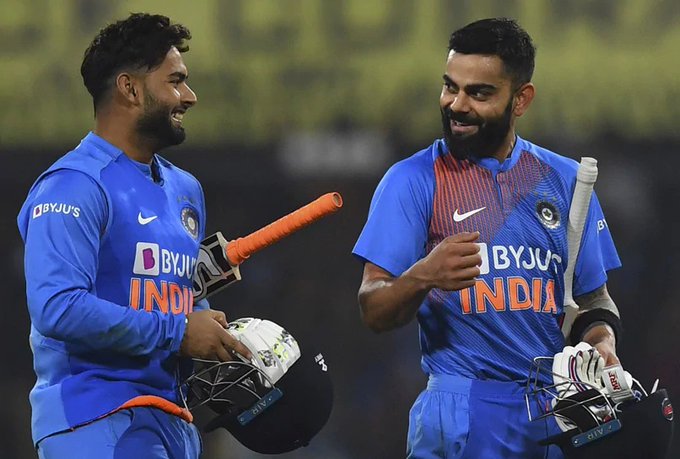
India beat Sri Lanka 7 wickets in Indore India beat Sri Lanka by seven wickets in Indore. Virat Kohli hit an unbeaten 30 as India ...
-
Academia in Reverse osmosis or In disorder? MAY 28, 2016 Sagar Media Inc HEADLINES PHOTOS WORLD BUSINESS ENVIRONMEN...
-
Finland voice for peace in ME, Iraq,Iran On Tuesday 7 January 2020, the Finland President of the Republic and the Ministerial Committee...
-
WorldEnvironmentDay Celebration in New Delhi 5 06 2014 Shri @ Prakashjavdekar releasing books on Environmental Issues at # WorldEn...


