Friday, September 7, 2012

WHO urges countries to scale-up disaster risk management


Yogyakarta, Indonesia, 6 September, 2012: Health Ministers from WHO’s South-East Asia Region renewed their commitment to improving disaster risk management in the health sector. Member countries are increasing investments and building capacities for all phases of disasters: risk reduction, preparedness, response and recovery. The Health Ministers deliberated on this issue at WHO’s 65th Regional Committee Meeting from 5 to 7 September.


Investments in disaster risk management in Indonesia are an example of this renewed commitment. Many institutional and community systems were in place after the tsunami. The Center for Health Crises Management in the Ministry of Health Indonesia has recently been designated as a WHO Collaborating Centre for Training and Research in Disaster Risk Reduction. The centre has multiple functions of overseeing capacity development and decentralized operational response in the country. As a WHO Collaborating Centre it will serve as a knowledge base and a source of good practices in emergency risk management in the health sector, serving the needs of countries globally.


“For emergencies, information and research are needed to continuously provide evidence for development work in the health sector. Health interventions in disaster risk management need to be systematically documented and analysed” said Dr Samlee Plianbangchang, WHO’s Regional Director for South-East Asia. “In-service training for health staff is urgently needed. Disaster risk management must be incorporated into the existing public health and medical curricula” he added.


Aside from information, services need to continue during emergencies. Health facilities should be designed to ensure resistance to the major hazards that prevail in their locations. Emergency health facility plans should be in place and all health staff need to be familiar with them. This capacity development should eventually be in and linked to the communities. Countries need to focus more on building and strengthening “community resilience” whereby people are able to help themselves during emergencies before outside help arrives. Community resilience will greatly reduce deaths, casualties and destruction in affected areas.


46% of all deaths due to disasters from 2001 to 2010 occurred in the 11 countries of WHO’s South-East Asia Region. Health Ministers from South-East Asian countries have demonstrated their commitment to disaster response by establishing and managing a response fund with WHO. The WHO South-East Asia Regional Health Emergency Fund (SEARHEF) assists countries by providing funding within 24 hours of a funding request during an emergency. SEARHEF funds have been utilized in 13 different emergencies throughout the Region since its inception in 2008.


The SEARHEF was first used to support health response to the devastating Cyclone Nargis in Myanmar in 2008. Subsequently, it was used for funding the creation of semi-permanent hospital wards in Northern Sri Lanka to care for victims of the escalated conflict in 2008-2009. Without these facilities countless more men, women and children would have suffered. The fund also supported smaller emergencies - providing antibiotics for burn victims of the 2010 fires in Dhaka which prevented post-burn infections, and assisting the response to flash floods in Sri Lanka. In major emergency during the 2011 flood in Thailand, boats and life jackets for mobile health units were provided through this fund. In the Democratic People’s Republic of Korea the fund was utilized to equip and mobilize household doctors to mobilize them during torrential rains in 2011.


This is a unique cooperation between countries that provides a mechanism for solidarity in times of urgent need. Member States reaffirmed support for SEARHEF and quick emergency responses to disasters throughout the Region at the 65th Regional Committee Meeting

Thursday, September 6, 2012

Instituto Cervantes Nueva Delhi Miércoles 12 de septiembre de 2012 / Wednesday 12th of Septemberof 2012 Encuentros con la narrativa: “Contigo aprendí”, de Silvia Grijalba Miércoles 12 a las 6.30pm en la sala de conferencias. En español con traducción simultánea al inglés. Entrada libre. Sinopsis: Silvia Grijalba ha sabido recrear una época fascinante a través de un lenguaje muy sensual y un estilo transparente. La agarrotada y reprimida sociedad de la España de los treinta contrasta profundamente con el ambiente sofisticado, culto y glamuroso de la sociedad neoyorkina y el mundo vehemente y voluptuoso de La Habana. Son tiempos de esplendor pero también de grandes contrastes y de profundos cambios, sobre todo para las mujeres. La Ley Seca en Estados Unidos; la proclamación de la República a España; el momento en el que Nueva York comienza a desplazar a París como ciudad cultural del mundo. Una época, en definitiva, fascinante, que la autora ha sabido recrear con esmero, agilidad y pasión Biografía: Silvia Grijalba es novelista, periodista y autora de letras de canciones. Con su última novela, Contigo Aprendí (Planeta) ganó en el 2010 el Premio Fernando Lara de Novela. Publicó su primera novela, Alivio Rápido, en 2001 (Random House). Le siguió Atrapada en el Limbo, en 2005 (Random House). Ha sido redactora de la sección de cultura, columnista y reportera en el diario El Mundo desde la fundación del periódico, en el que actualmente sigue colaborando. También ha publicado los ensayos Dios Salve a la Movida (2006) y Palabra de Rock (2008) y una Biografía sobre Depeche Mode (1995). Sus obras se han traducido al italiano y al alemán. Ha colaborado en revistas como Rolling Stone, Vogue, Marie Claire, Glamour, Yo Dona, el periódico británico The Guardian y en programas de radio y televisión como. Las Noches Blancas, Dragolandia y D Calle. Dirige el festival de spoken word Palabra y Música y el ciclo anual Poesía del Rock. Su novela Atrapada en el Limbo está en fase de preproducción, mientras trabaja el guión junto al director y guionista Manuel Martín Cuenca. Meeting with the narrative: “With you I learned”, by Silvia Grijalba Wednesday 12th at 6.30pm at the conference room. In Spanish with english simultaneous translation. Free entry. Synopsis: Silvia Grijalba has managed to recreate a fascinating time through a very sensual language and transparent style. The stiff and repressed society of Spain in the 30´s is contrasted with the sophisticated, cultured and glamour of New York’s society and impassioned and voluptuous world of Havana. These are times of splendour but also of great contrasts and profound changes, especially for women. A period in history in which there existed prohibition in the United States, the proclamation of the Republic in Spain arose, and New York begins to move to Paris as a cultural city in the world. Ultimately, this is a fascinating period in time that the author has managed to recreate carefully, agility and with passion. Biography: Silvia Grijalba is a novelist, journalist, and song writer. Her most recent novel, Contigo Aprendi (With You I Learned), won the Fernando Lara Novel prize for 2010. She published her fist novel Alivio Rápido back in 2001.Her following effort was Atrapada en el Limbo in 2005. Silvia has worked as a columnist, and reporter for the daily diary El Mundo. She began her work with the newspaper, since it was founded and continues to contribute. She has also published several essay papers such as, Dios Salve a la Movida in 2006 and Palabra de Rock in 2008 along with a biography about Depeche Mode in 1995. Her work has been translated into both Italian and German. Silvia has collaborated with a number of magazines including Rolling Stone, Vogue, Marie Claire, Glamour, Yo Dona, and the British news paper The Guardian. Additionaly Silvia has also been present in a couple of radio and television programs such as Las Noches Blancas, Dragolandia and D Calle. She is the current director of spoken word palabra y música and the annual event Poesia Del Rock. Her novel Atrapada en el Limbo is in pre production phase, while she works with the director and writer Manuel Martin Cuenca on the script. Instituto Cervantes Nueva Delhi 48, Hanuman Road Connaught Place 110 001 Nueva Delhi India Tel. : 91 11 4368 19 00 Fax: 91 11 4356 86 92 cenndel@cervantes.es

Tuesday, September 4, 2012


Centre for Civil Society Wraps Up the 9th Jeevika: Asia Livelihood Documentary Film Festival

25 documentary filmmakers took the stage with their films

on livelihood to champion the freedom struggle for the poor!

For Immediate Release

New Delhi


Tuesday 3 September 2012—Centre for Civil Society (CCS) brought down the curtains on the 9th Annual Jeevika: Asia Livelihood Documentary Festival on Sunday 2 September 2012 at the India Habitat Centre. The festival honoured professional and student documentary filmmakers covering livelihood issues that raised consciousness on the trials and tribulations faced by many to attain a life with dignity.

Over the course of three days, the festival saw the participation of hundreds of people including diplomats, professionals, aspiring filmmakers, students, professors, media spokespersons and many other weekend revelers. 68 films were submitted, out of which 18 documentaries were shortlisted showcasing various aspects of livelihood such as the hardships faced by Mumbai’s night rat killers, the near extinction of Kerala’s adivasi population, the loopholes of the Indian judicial system and many more appalling and sensitive issues.

The film festival was inaugurated by the screening of Wagah by Supriyo Sen and Bom ‘One Day Ahead of Democracy’ by Amalan Datta. Alongside film screenings, the festival organised insightful speeches and panel discussions such as the Law, Liberty & Livelihood talk with Amit Chandra, Campaign Coordinator of Jeevika and Parth J Shah, President of Centre for Civil Society on the importance of deregularising market entry for livelihood freedom. The panel discussion on documentary & public policy led by Nandan Saxena & Anasuya Vaidya captivated aspiring filmmakers, as he shared best practices on capturing compelling stories and building a following that cares for social change. Saxena said, "Documentary is the most flexible mode of showcasing anything. It is an extremely useful tool to raise awareness and sensitise audiences about relevant issues".

Subhash Ghai, noted Film director, joined Jeevika to address the audience on filmmaking and the need to transform education in India to improve understanding on livelihood issues and inclusive development. Mr. Ghai has extended his support to Jeevika and the 18 shortlisted filmmakers by inviting their films to showcase at his institute, Whistling Woods International in Mumbai. As the evening came to a close, the energy levels were kept high thanks to the enthralling performances by dance troupes Nritya from Sri Venkateshwara College and Oorja from Hansraj College. Following their performance, Anjan Roy, Economic Advisor, Associated Chambers of Commerce and Industry (ASSOCHAM) and Amir Ullah Khan, Economist & Deputy Director, Bill and Melinda Gates Foundation stimulated critical thinking on various issues plaguing the informal sector.

The festival celebrated the top three filmmakers by awarding them a Jeevika trophy and cash prize. The first prize in the professional category was awarded to Bishnu Dev Halder, for ‘I was Born in Delhi’, a feature documentary shot over a period of five years, showcasing the effect of social deprivation and poverty of two young girls, and their experiences dealing with the harsh social realities of life in a metropolis.

‘Shifting Undercurrents-Seaweeds Collectors of Gulf of Mannar’ by Rita Banerji documents the struggle of women seaweed collectors, took second prize and ‘We are foot soldiers’ by Debolina Dutta and Oishik Sircar, a sensitively handled film depicting the struggle and fight for dignity of children of sex workers rounded of the top three. The film ‘Dimond Band’ by Samridhi Dasot, conveying a story about a wedding music band won the Best Student Documentary Award.

‘The Rat Race’, a documentary by Miriam Chandy Menacherry won the Special Mention at the festival. The film previously screened in Amsterdam and at Cannes in 2011 before making its cinematic debut in India. The gritty, true life account of Mumbai’s night rat killers was shot over two years, unraveling the story of rat-control each night as the city slept.

About Jeevika

Pioneered by Centre for Civil Society, Jeevika is an award winning effort aiming to eradicate market entry and exit barriers to promote individual livelihood for street entrepreneurs (i.e. street hawkers, cycle rickshaw pullers, small shop owners etc.) to bring freedom to the enterprising poor. Jeevika recognises that the pursuit of livelihood is more valuable for those at the bottom rung of the economic ladder. This entails the removal of various licences and laws, rules and regulations under which citizens live. The campaign aims to achieve legal recognition for informal sector entrepreneurs to enable them to focus on their livelihood activities without undue harassment and humiliation at the hands of public authorities and private mafia.

About Centre for Civil Society

Centre for Civil Society is a globally recognised public policy think tank advancing personal, social, economic and political freedoms. The Centre challenges conventional wisdom to usher an intellectual revolution that encourages people to look beyond the obvious, think beyond good intentions and act beyond activism. Through research, outreach and advocacy, the Centre aims to promote choice, competition and community based policy reforms. 15 August 2012 marks 15 years of Centre for Civil Society working for Social Change through Public Policy!

To find out more about the festival and for further media engagement, please contact:

Manoj Mathew

Festival Director

Jeevika: Asia Livelihood Documentary Festival

Monday, September 3, 2012

Egypt TV head denies inciting Mursi’s murder

A television channel chief and presenter denied calling for the murder of President Mohamed Mursi when his trial on incitement charges opened in the Egyptian capital today.
“I merely criticised President Mursi,” Tawfiq Okasha told judges at the court appearance, the news agency journalist reported
“This is a political trial. The Muslim Brotherhood wants to silence all dissent and reproduce the system from before the revolution,” he said.
Okasha added that he was in the dock for “revealing the Brotherhood’s involvement in attacks on police stations, courts and prisons during the revolution” in 2011.
Okasha’s Al-Faraeen channel, suspended on August 16, aired a show that was stridently anti-Mursi and anti-Muslim Brotherhood, the party from which the leader emanates.
The charges against him came at the same time that Islam Afifi, the editor of small independent newspaper Al-Dustour, was accused of spreading false news and inciting disorder.
Okasha arrived at court surrounded by his supporters who chanted “The people want Al-Faraeen!”
The court set the next session of the trial for October 3 after hearing the case for the defence, which argued that the complaints against Okasha were not filed by Mursi personally.
Both Okasha and Afifi were banned from leaving the country in August.
Afifi was freed after spending several hours in custody on the day of his trial, after a decree signed by Mursi scrapped preventive detention for alleged publishing crimes.
Afifi was the first journalist to go on trial since the overthrow of veteran strongman Hosni Mubarak in February last year.
After his inauguration on June 30, Mursi moved to bolster his power over the influential military and a state media that had been hostile towards his once banned but powerful movement.
He got the Muslim Brotherhood-dominated upper house of parliament to name new editors-in-chief for state media that had been hostile to him and the Islamist group.
Mursi’s opponents accuse him of seeking to muzzle the press, and there has also been international concern.
US State Department spokeswoman Victoria Nuland said that the prosecutions of Okasha and Afifi ran counter to the spirit of last year’s revolution.(
TLC TO AIR “WHAT NOT TO WEAR-INDIA”
THE INDIA EDITION OF THE INTERNATIONAL HIT MAKEOVER SERIES
-               Series to be hosted by Soha Ali Khan and Aki Narula -
-               To Air Every Night at 10 pm, Starting September 3rd -

New Delhi, August 23, 2012: India’s favourite lifestyle channel TLC will present the India edition of the international makeover series – WHAT NOT TO WEAR. Drawing on the talent of actor Soha Ali Khan and acclaimed stylist Aki Narula, WHAT NOT TO WEAR-INDIA inspires style challenged participants to trade in the drab for fab.   A 13-part series, WHAT NOT TO WEAR-INDIA will air every night at 10 pm starting September 3rd on TLC.

From housewives who have put their life on hold, to fast track professionals going nowhere with their wardrobes, to entrepreneurs who risk big, except when it comes to their wardrobe; WHAT NOT TO WEAR-INDIA will help empower women by giving them a unique identity while keeping active their distinct lifestyles. Nominated by their friends and family, each episode becomes a personal journey of women reinventing themselves with new found vigour, as they bid adieu to clothing items from their wardrobe they never should have worn in the first place.

Rahul Johri, senior vice president and general manager - South Asia, Discovery Networks Asia-Pacific, said, “TLC has been the front runner in bringing the world’s best experiences to Indian television. Pushing the boundaries of differentiated and inspiring television entertainment, we are delighted to present another pertinent and refreshing India centric series – WHAT NOT TO WEAR-INDIA. Hosted by amazing personalities and experts Soha Ali Khan and Aki Narula, the series would activate a new wave of style change and become the new benchmark in lifestyle programming.”  

Commenting on her television debut, Soha Ali Khan said, “I am excited to be part of TLC; one of my favourite channels. WHAT NOT TO WEAR-INDIA is an extremely interesting makeover series that beautifully captures the emotional, psychological and physical journeys of women to style enlightenment. We hope that viewers enjoy the show as much as we enjoyed making it.”


Hosting his first television series for an international channel, Aki Narula said, “TLC’s WHAT NOT TO WEAR – INDIA was the best and most creative platform for me to say YES to play host, guide and mentor. It’s a thoroughly researched, interactive and insightful series, where I could aptly put all my years of experience of fashion and style to great practical use for the participants and the viewers.”

Watch Soha and Aki change the way participants’ look and feel about themselves. Participants need to work on their wardrobe and self-examine before a 360 degree mirror. Style experts Soha and Aki do not sugar coat their comments when participants forget the 'rules' of shopping and style appropriate dressing. They advocate tough love on what is worn and what is gone. All of which adds up to the unveiling of the restyled woman to friends, family and colleagues who nominated them.

Watch the tears of realization and joys of fulfillment as they turn from dowdy to dashing in WHAT NOT TO WEAR-INDIA every night at 10 pm starting September 3rd only on TLC. WHAT NOT TO WEAR-INDIA is based on the original format devised by BBC and produced by BBC Worldwide.

Sunday, September 2, 2012

Intense Mass Struggles Are The Only


Option: Sudhakar Reddy


“The international crisis of capitalism, which has hit European countries and the US badly, is having its impact on the Indian economy too. Failure of the monsoons is a big blow in the agriculture front. Inflation, unemployment and price rise are haunting the people. There is a power crisis now and people are afraid that food and water crises may erupt too,” said CPI general secretary S Sudhakar Reddy in an exclusive interview to the journalists of the Party’s national media centre on September 2, 2012.

Question: The month-long food security campaign that culminated in a five-day dharna in front of Parliament by the left parties is the first national campaign by the CPI after its 21st Party Congress in Patna. How do you evaluate the performance of the campaign and its success in relation to the decisions — political and organisational — of the Party Congress?


Before I answer this question, I would like to say something about the present situation. The Coalgate scam, which exposed loopholes in allotment of coal blocks to corporate houses brought huge loss to the nation. The total amount of losses in the UPA-II regime is close to Rs 5 lakh crores. This should be thoroughly probed through a judicial enquiry. The BJP’s stand of stalling Parliament is unacceptable. This is a fascist method. They should respect Parliament. At the same time the prime minister should own up moral responsibility.

Though the food security campaign is the maiden month-long joint national successful campaign after the 21st Congress of the Communist Party of India and the 20th Congress of the Communist Party of India (Marxist), our party had participated and led several statewide campaigns prior to this. Some of them were the campaigns in Maharashtra on the issue of pension, mass land occupation movement in Andhra Pradesh, large-scale rallies demanding the cancellation of mining licences to mines, against price rise in Tamil Nadu, against corruption and price rise in Kerala, for food security in Bihar and on similar issues in various other states. The month-long campaign is undoubtedly a successful one. The four parties together prepared a hand bill, a detailed booklet, issued posters, addressed press conferences, conventions, public meetings and street corner meetings, etc., and created an awareness and atmosphere that is necessary for the success of the campaign. The leaflets were published in all the regional languages and articles were written in local newspapers.

The five-day dharna before Parliament at Jantar Mantar in the national capital was a big success. Several thousands of people participated every day from Delhi and its adjoining states — Haryana, Uttar Pradesh, Punjab, Rajasthan, Madhya Pradesh, Himachal Pradesh and Uttarakhand. While the dharna was going on here in Delhi, simultaneous dharnas were staged before the state legislatures in Bihar, West Bengal, Odisha, and for a lesser number of days in Madhya Pradesh and other states. The day-long dharna was addressed by national leaders of the four left parties, MPs and left leaders from the states, professors and other intellectuals.

The media tried to undermine and ignore such a massive dharna on the most important issue of food security. They tried to highlight the hunger strike of Anna Hazare and his group of people. The two campaigns are neither competitive nor against each other but still the media barons did not like the left campaign. But the attention of the nation has been drawn on this important issue. On behalf of the four left parties, we met the prime minister and urged upon him to amend the pending Food Security Bill with the following changes: universal PDS, removal of BPL-APL categories, supply of 35 kg foodgrain, reasonably good quality of foodgrain, at Rs 2 a kg. We suggested edible oil, dal and other food items should also be supplied through PDS as earlier. We also demanded that the amended Food Security Bill should be introduced in the current session of Parliament itself. He replied that he has to wait for the Planning Commission’s final recommendations.

The left parties decided to observe an all India food security day on September 12, 2012, once again to pressurise the Union government. On the whole, the food security campaign was a great success, even though larger number of masses could have been mobilised. We have to find out ways by which much larger number of masses participated in such campaigns. Certainly sympathy, appreciation and support will enthuse the cadres but the participation and involvement of masses in millions will have a bigger impact and force the government to change its policies. We will carry on the campaign with this task in mind.

These are certain weaknesses of our party organisation, which we have to overcome by continuous unleashing of such kinds of campaigns.


2. How do you see the economic and political situation in the country today and what are the party’s plans and suggestions to alter the critical state of affairs?

The international crisis of capitalism, which has hit European countries and the US badly, is having its impact on the Indian economy too. Failure of the monsoons is a big blow in the agriculture front. Inflation, unemployment, price-rise are haunting the people. There is a power crisis now and people are afraid of food and water crises that are looming large. The world’s biggest black out has taken place in India and then Union power minister Sushilkumar Shinde, who has presided over this massive disaster, was promoted as the central home minister. Also Chidambaram, the man responsible for the mess in the economy by enforcing wrong policy measures was brought back to man the finance portfolio. Worse, many more scams are getting unearthed. The government is working overtime to grant benefits to the corporate houses and MNCs. Paupersiation of people is increasing while corporate houses doubled their assets in the last five-years with additional profit of Rs 5 lakh crores. Still their greed is not satisfied and they pressurise the government for more pro-corporate policies.

The political situation is reflecting the crisis in the economy. Vast masses of people are unhappy with the miserable failure of the government to tackle the basic issue. With the government discredited, different sections of people are agitating for food, land, against acquisition of agricultural land, against stinking corruption and on various other issues on which the government is insensitive. Poor adivasis are being killed in the name of Maoists.

The courts and CAG are exposing the bankrupt policies of the government. Instead of making attempts for a consensus in the presidential election, as they did not have enough number of votes, the Congress party leadership managed majority though political manipulation, which helped their candidate enter Raisina Hills while their image suffered a set back. The Congress party is directionless, leaderless and passing through a bankrupt situation.

Saturday, September 1, 2012

Instituto Cervantes Nueva Delhi


Domingo 2 de septiembre 2012 / Sunday 2nd of September 2012


Este mes de septiembre traemos una muestra de cine peruano con la colaboración de la Embajada de Perú. Inauguramos la serie con la película:


“El bien esquivo”


Domingo 2 de septiembre a las 4.30pm en el auditorio. En español con subtítulos en inglés. Entrada libre.


Sinopsis:


La película se desarrolla en el siglo XVII. Presenta un momento determinante de la historia Peruana y latinoamericana en la cual la identidad nacional está definiendo sus parámetros. El mestizaje, la inter-culturización, el sincretismo religioso, pero también la aventura, el romance y la intriga, se entrecruzan en la historia de los personajes marginales enfrentados a los prejuicios y la intolerancia de una época.


Dirección: Augusto Tamayo


Duración: 130min.


Idioma: Español


Subtítulos: Inglés


Año:2001


Trailer


En español con subtítulos en inglés. Entrada libre. This september we bring the Peruvian film series in collaboration with the Embassy of Peru. We open the series with the film:


“The elusive good”


Sunday 2nd of September at 4.30pm at the auditorium. In Spanish with English subtitles. Free entry.


Synopsis:


With a careful recreation of colonial Peru in the XVII century. “El bien esquivo / “the elusive good” tells the story of the social, racial and spiritual marginality of the two tormented characters in a key moment of Peruvian history, when national identity is defining its parameters. The mixture of bloods and cultures, the struggle between conflicting religious beliefs, but also adventure, romance and intrigue combine in the story of two outcasts fighting against prejudice and intolerance.


Direction: Augusto Tamayo


Duration: 130min.


Language: Spanish


Subtitles: English


Year:2001


Trailer


In Spanish with English subtitles.

Free entry.


Instituto Cervantes Nueva Delhi

48, Hanuman Road

Connaught Place

110 001 Nueva Delhi

India

Tel. : 91 11 4368 19 00

Fax: 91 11 4356 86 92

cenndel@cervantes.es


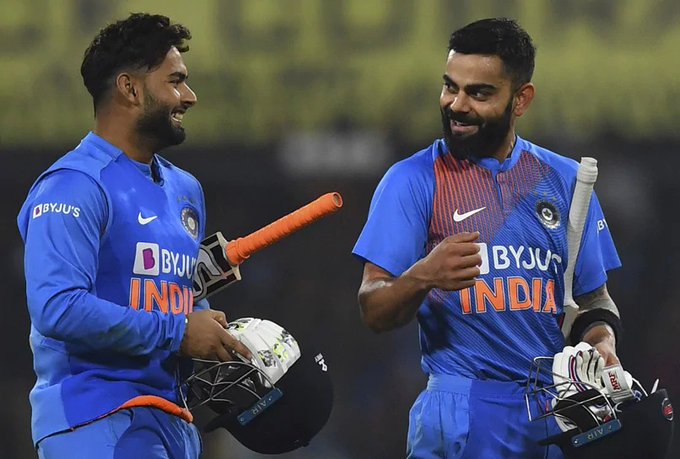
India beat Sri Lanka 7 wickets in Indore India beat Sri Lanka by seven wickets in Indore. Virat Kohli hit an unbeaten 30 as  India   ...