Election Commission invited observers from ten countries to observe Sunday’s general election, EC secretary-general Suthipol Thaveechaikarn said on Thursday.Mr Suthipol said the invitation to show the international community that the election complies with international standards.The ten countries are: Australia, Bangladesh, Bhutan, India, South Korea, Malaysia, Maldives, Nepal, Switzerland and Japan, the EC secretary-general said.
Election commissioner Prapan Naikowit said the international observers were invited because all five members of the EC wanted to show that the Sunday’s election is transparent, free and fair.EC members also wanted to share points of view on the election's management with the international observers, Mr Prapan added.
The Royal Thai Police Office information technology centre today announced that preparations were now in place to report vote tally results from all constituencies nationwide to the EC, so that unofficial results could be known as soon as possible and prevent confusion and silence unfounded rumours.A police officer stands guard at a polling station in Samut Prakan on June 16, 2011 as voters cast their advance ballots. The police information technology centre was assigned by the cabinet to report results from tally rooms nationwide to the EC as quickly as possible.
The job was given to police because on July 3 more than 100,000 police will be deployed at 91,559 polling units throughout the nation, and because 1,459 police stations nationwide are well equipped with Internet and other communication systems.
Police spokesman Prawut Thavornsiri said the tally reporting system was tested by police stations nationwide on Thursday and it worked well.Unofficial results from all constituencies were expected to be known by 10pm on July 3, Pol Maj-Gen Prawut said.Boxes containing the ballots would, after being counted, be kept at 305 police stations spread all over the country for one year.Senior police adviser Pongsapat Pongcharoen said police will step up its crackdown on crime nationwide from tomorrow to July 7 to ensure law and order before and after the July 3 election.Pol Gen Pongsapat said that before election day more checkpoints would be set up to block the movement of weapons and gunmen for hire.After the election, emphasis would be given to providing security for candidates and canvassers.
The police election monitoring centre had received a large number of complaints via hotline 1599, mostly about vote buying, particularly in the Northeast. Information from the complaints had been passed to local police and the EC.Bangkok Governor Sukhumbhand Paribatra said there are now 10,000 CCTV cameras operating in Bangkok to make the capital safer.
The Bangkok Metropolitan Administration (BMA) installed the 10,000 surveillance cameras near junctions and in areas where there was a high crime risk, and near schools, hospitals, community areas and important places around the capital, he said.The city's CCTV cameras had so far recorded 652 crimes and other incidents - robberies, physical assault and other crimes, and accidents, in both risk areas and community areas, said MR Sukhumbhand.Media-agenies
Thursday, June 30, 2011

France's Christine Lagarde is first woman IMF chief
France's Christine Lagarde is first woman IMF chief-French Finance Minister Christine Lagarde was elected as the first woman head of the International Monetary Fund, succeeding Dominique Strauss Kahn, who resigned last month after being arrested on rape charges.
Lagarde, 55, is the first woman named to the top IMF post since the institution's inception in 1944. "The Executive Board of the International Monetary Fund (IMF) today selected Christine Lagarde to serve as IMF Managing Director and Madame Chairman of the Executive Board for a five-year term starting on July 5, 2011," an official IMF announcement said.
The IMF said the selection of Lagarde by the 24-member Executive Board, representing the IMF's 187 member countries, brings to conclusion the selection process initiated by the Executive Board on May 20.
During the process the Board met with Agustin Carstens of Mexico and Lagarde the two aspirants for the post. She also won support from Europe, China and Russia.
"Based on the candidate profile that had been established, the Executive Board, after considering all relevant information on the candidacies, proceeded to select Lagarde by consensus. The Executive Board looks forward to Ms Lagarde effectively leading the International Monetary Fund," it said.
"The IMF has served its 187 member countries well during the global economic and financial crisis, transforming itself in many positive ways. I will make it my overriding goal that our institution continues to serve its entire membership with the same focus and the same spirit," said Lagarde.
Lagarde said she was honoured and delighted by her appointment. "I am deeply honored by the trust placed in me by the Executive Board. I would like to thank the Fund's global membership warmly for the broad-based support I have received. I would also like to express my respect and esteem for my colleague and friend, Agustn Carstens," she said in her first official statement.
Lagarde also has had an extensive and noteworthy career as an anti-trust and labour lawyer, serving as a partner with the international law firm of Baker & McKenzie, where the partnership elected her as chairman in October 1999. She held the top post at the firm until June 2005 when she was named to her initial ministerial post in France.
Lagarde has degrees from Institute of Political Studies (IEP) and from the Law School of Paris X University, where she also lectured prior to joining Baker & McKenzie in 1981.
She takes over at a tumultuous time when emerging nations want a greater voice at the IMF and the organisation's reputation has been tarred by a scandal involving Dominique Strauss-Kahn. Strauss-Kahn resigned last month after being charged with sexually assaulting a New York City hotel housekeeper.
Lagarde, 55, is the first woman named to the top IMF post since the institution's inception in 1944. "The Executive Board of the International Monetary Fund (IMF) today selected Christine Lagarde to serve as IMF Managing Director and Madame Chairman of the Executive Board for a five-year term starting on July 5, 2011," an official IMF announcement said.
The IMF said the selection of Lagarde by the 24-member Executive Board, representing the IMF's 187 member countries, brings to conclusion the selection process initiated by the Executive Board on May 20.
During the process the Board met with Agustin Carstens of Mexico and Lagarde the two aspirants for the post. She also won support from Europe, China and Russia.
"Based on the candidate profile that had been established, the Executive Board, after considering all relevant information on the candidacies, proceeded to select Lagarde by consensus. The Executive Board looks forward to Ms Lagarde effectively leading the International Monetary Fund," it said.
"The IMF has served its 187 member countries well during the global economic and financial crisis, transforming itself in many positive ways. I will make it my overriding goal that our institution continues to serve its entire membership with the same focus and the same spirit," said Lagarde.
Lagarde said she was honoured and delighted by her appointment. "I am deeply honored by the trust placed in me by the Executive Board. I would like to thank the Fund's global membership warmly for the broad-based support I have received. I would also like to express my respect and esteem for my colleague and friend, Agustn Carstens," she said in her first official statement.
Lagarde also has had an extensive and noteworthy career as an anti-trust and labour lawyer, serving as a partner with the international law firm of Baker & McKenzie, where the partnership elected her as chairman in October 1999. She held the top post at the firm until June 2005 when she was named to her initial ministerial post in France.
Lagarde has degrees from Institute of Political Studies (IEP) and from the Law School of Paris X University, where she also lectured prior to joining Baker & McKenzie in 1981.
She takes over at a tumultuous time when emerging nations want a greater voice at the IMF and the organisation's reputation has been tarred by a scandal involving Dominique Strauss-Kahn. Strauss-Kahn resigned last month after being charged with sexually assaulting a New York City hotel housekeeper.
Wednesday, June 29, 2011
First “Friends of the wild” Initiative
Wildlife Crime Control Bureau Launches Its First “Friends of the wild” Initiative
Wildlife Crime Control Bureau (WCCB), India has launched its Friends of the Wild Initiative calling for enrolment of volunteers from all walks of life above the age of 21. The objective of the initiative is to conserve the country’s rich flora & fauna. With a view to encourage the participation of wildlife enthusiasts in the country, WCCB invites volunteers from rural & urban areas to assist in natural surveillance, capacity building awareness etc.
Wildlife Crime Control Bureau (WCCB), India has launched its Friends of the Wild Initiative calling for enrolment of volunteers from all walks of life above the age of 21. The objective of the initiative is to conserve the country’s rich flora & fauna. With a view to encourage the participation of wildlife enthusiasts in the country, WCCB invites volunteers from rural & urban areas to assist in natural surveillance, capacity building awareness etc.
Monday, June 27, 2011
Get Reforms Back On Track - Rajiv Kumar
Get Reforms Back On Track - Rajiv Kumar
The recent 25 basis point hike in interest rates by the RBI, about which there was a sense of inevitability, has further strengthened the perception that India is faced with some difficult macroeconomic options in the coming months. Inflation does not seem to be headed downwards despite the RBI having raised interest rates 10 times by 275 basis points during the last one year. In May 2011, the WPI, which the RBI apparently continues to use as the basis for its policy decisions, stood at 9.1% year on year (all figures on inflation refer to the year on year) which was higher than the 8.6% in April 2011. Core inflation (minus food and fuel) was also higher in May having risen to 8.6% as compared to 8% in the previous month. Global oil prices are still not showing any significant downward trend and global commodity prices including food prices also remain firm and volatile. Domestically, signs of any relief from a strong supply side response are also not yet visible. There is not so good news about the monsoon with the meteorological department now revising its monsoon forecast downwards and capacity expansion nearly stalled with growth in gross fixed capital formation (investments) having declined from 17.4% in the first quarter of 2010-11 to a mere 0.4% in the fourth quarter of 2010-11. Resources locked up in stalled projects are currently three times the level in 2007-08. Thus, it does seem that the RBI, committed to bringing down the inflation to within its comfort zone of between 5-6%, and egged on this direction by the Prime Minister's Economic Advisory Committee, will continue raising rates for the next few months. This could well imply further reduction in growth forecasts which are now already firmly below the 8% level. Is it not time therefore to lower expectations and focus more on the reforms that are required to put growth back on the 9-10% trajectory that seemed to be well within our grasp not so long ago?
The purists will argue that with growth still above 7%, this is time to restore the macroeconomic balances and not be distracted by these short term weakening of the growth momentum. There is of course merit in this argument. But the catch is in the recipe to be used for restoring the macro balance. If we continue to rely almost exclusively on monetary policy for achieving this balance, I am afraid we are destined to not only fail in our objective but could end up causing serious damage to medium term growth prospects and inflict considerable pain on the people. Over reliance on monetary policy would imply pushing up rates to squeeze out inflationary expectations even if it implies a major slow down in GDP growth as was experienced in the latter half of the nineties. Given the much higher aspirations now, this could generate serious social stresses and further vitiate the political atmosphere. This is not the advisable way forward. Instead the government will hopefully find the will and the political acumen to push forward with the reform agenda that will remove some of the supply side constraints and improve the investment climate.
There are several steps that the government could take that do not require any legislative action. These include the finalization of the manufacturing policy; announcing a policy on FDI in multi-brand retail; the delisting of perishables from the APMC act; permitting the actual dismantling of the administered oil price mechanism; and bringing down fertilizer subsidies. These measures should be announced as soon as possible as any further delay could make these decisions hostage to the next round of electoral cycle with elections in UP now less than ten months away. The news that the ministry of fertilizers is opposed to the recommendations of the Saumitra Choudhary committee on hiking urea prices does not auger well and if true the ministry should be directed to let the greater national welfare prevail over sectoral considerations.
There is, however, serious effort required to ensure that even the major reforms currently stalled due to lack of sufficient political support need to be pushed forward. These include the GST, which has the potential to raise growth rates by a couple of percentage points on its own; the financial sector and education sector reforms for bills are now pending in the parliament. These reforms are critical for achieving the supply side response. The education sector reforms are specially critical as these are key to accelerating skill formation and expanding training and education capacities in the economy. Without such capacity expansion and improvement in the regulatory framework in the education sector the demographic advantage that the country possesses will be lost. The implementation of these reforms, however, requires broader political consensus that can only happen if political parties set aside opportunistic considerations in deference to national welfare. I am not sure if the gravity of the economic situation and the need to push forward the reform agenda is still sufficiently clear to our leaders across the political spectrum. I hope it is. I am afraid, India's economic story may not be able to bear the cost of another wasted parliamentary session and the continuation of the hysteresis that seems to characterize the present governance situation.
The Hindu Business Line on June 25, 2011.
________________________________________________________
The author is Secretary General of FICCI.
The recent 25 basis point hike in interest rates by the RBI, about which there was a sense of inevitability, has further strengthened the perception that India is faced with some difficult macroeconomic options in the coming months. Inflation does not seem to be headed downwards despite the RBI having raised interest rates 10 times by 275 basis points during the last one year. In May 2011, the WPI, which the RBI apparently continues to use as the basis for its policy decisions, stood at 9.1% year on year (all figures on inflation refer to the year on year) which was higher than the 8.6% in April 2011. Core inflation (minus food and fuel) was also higher in May having risen to 8.6% as compared to 8% in the previous month. Global oil prices are still not showing any significant downward trend and global commodity prices including food prices also remain firm and volatile. Domestically, signs of any relief from a strong supply side response are also not yet visible. There is not so good news about the monsoon with the meteorological department now revising its monsoon forecast downwards and capacity expansion nearly stalled with growth in gross fixed capital formation (investments) having declined from 17.4% in the first quarter of 2010-11 to a mere 0.4% in the fourth quarter of 2010-11. Resources locked up in stalled projects are currently three times the level in 2007-08. Thus, it does seem that the RBI, committed to bringing down the inflation to within its comfort zone of between 5-6%, and egged on this direction by the Prime Minister's Economic Advisory Committee, will continue raising rates for the next few months. This could well imply further reduction in growth forecasts which are now already firmly below the 8% level. Is it not time therefore to lower expectations and focus more on the reforms that are required to put growth back on the 9-10% trajectory that seemed to be well within our grasp not so long ago?
The purists will argue that with growth still above 7%, this is time to restore the macroeconomic balances and not be distracted by these short term weakening of the growth momentum. There is of course merit in this argument. But the catch is in the recipe to be used for restoring the macro balance. If we continue to rely almost exclusively on monetary policy for achieving this balance, I am afraid we are destined to not only fail in our objective but could end up causing serious damage to medium term growth prospects and inflict considerable pain on the people. Over reliance on monetary policy would imply pushing up rates to squeeze out inflationary expectations even if it implies a major slow down in GDP growth as was experienced in the latter half of the nineties. Given the much higher aspirations now, this could generate serious social stresses and further vitiate the political atmosphere. This is not the advisable way forward. Instead the government will hopefully find the will and the political acumen to push forward with the reform agenda that will remove some of the supply side constraints and improve the investment climate.
There are several steps that the government could take that do not require any legislative action. These include the finalization of the manufacturing policy; announcing a policy on FDI in multi-brand retail; the delisting of perishables from the APMC act; permitting the actual dismantling of the administered oil price mechanism; and bringing down fertilizer subsidies. These measures should be announced as soon as possible as any further delay could make these decisions hostage to the next round of electoral cycle with elections in UP now less than ten months away. The news that the ministry of fertilizers is opposed to the recommendations of the Saumitra Choudhary committee on hiking urea prices does not auger well and if true the ministry should be directed to let the greater national welfare prevail over sectoral considerations.
There is, however, serious effort required to ensure that even the major reforms currently stalled due to lack of sufficient political support need to be pushed forward. These include the GST, which has the potential to raise growth rates by a couple of percentage points on its own; the financial sector and education sector reforms for bills are now pending in the parliament. These reforms are critical for achieving the supply side response. The education sector reforms are specially critical as these are key to accelerating skill formation and expanding training and education capacities in the economy. Without such capacity expansion and improvement in the regulatory framework in the education sector the demographic advantage that the country possesses will be lost. The implementation of these reforms, however, requires broader political consensus that can only happen if political parties set aside opportunistic considerations in deference to national welfare. I am not sure if the gravity of the economic situation and the need to push forward the reform agenda is still sufficiently clear to our leaders across the political spectrum. I hope it is. I am afraid, India's economic story may not be able to bear the cost of another wasted parliamentary session and the continuation of the hysteresis that seems to characterize the present governance situation.
The Hindu Business Line on June 25, 2011.
________________________________________________________
The author is Secretary General of FICCI.
Japan PM may step down by mid-August
Japan Prime Minister Naoto Kan may step down by mid-August if parliament passes key bills for disaster reconstruction, senior lawmakers said today.Kan pledged earlier this month to resign soon, but he has also demanded that bills on reconstruction from the March 11 quake, tsunami and nuclear disaster are passed first, along with legislation to promote renewable energy sources.
"Once things settle in late July or early August, I think the conditions for the prime minister to step down will be there," Jun Azumi, a senior member of Kan's Democratic Party of Japan (DPJ), told reporters.
Japan's centre-left government last week pushed through an extension of the parliamentary session by 70 days to the end of August.The DPJ and its coalition partners plan to use the time to pass the key reconstruction bills -another budget bill on rebuilding the disaster areas, as well as a bill to issue bonds for the current fiscal year to help pay for the recovery efforts.
Kan-who started his political life as an environmental campaigner also wants to pass a bill to promote renewable energy, having pushed for a rethink on atomic power since the Fukushima Daiichi nuclear plant disaster.
Once these bills get passed, "That'd be about what the prime minister should be responsible for," DPJ secretary general Katsuya Okada told reporters."I would like to see opposition parties pass these bills unconditionally," he said during a Fuji TV debate show.
Media agencies
"Once things settle in late July or early August, I think the conditions for the prime minister to step down will be there," Jun Azumi, a senior member of Kan's Democratic Party of Japan (DPJ), told reporters.
Japan's centre-left government last week pushed through an extension of the parliamentary session by 70 days to the end of August.The DPJ and its coalition partners plan to use the time to pass the key reconstruction bills -another budget bill on rebuilding the disaster areas, as well as a bill to issue bonds for the current fiscal year to help pay for the recovery efforts.
Kan-who started his political life as an environmental campaigner also wants to pass a bill to promote renewable energy, having pushed for a rethink on atomic power since the Fukushima Daiichi nuclear plant disaster.
Once these bills get passed, "That'd be about what the prime minister should be responsible for," DPJ secretary general Katsuya Okada told reporters."I would like to see opposition parties pass these bills unconditionally," he said during a Fuji TV debate show.
Media agencies
Sunday, June 26, 2011
Mayawati backed a separate Telangana
Media-men only allowed to shoot visuals when UP chief minister visited Hyderabad address party workers and gave feeler that BSP is becoming an alternative to the Congress. BJP coming to power at the Centre and in states,including Andhra Pradesh, in the future through social transformation.Mayawati alleged that parties like “Congress & Co” or “BJP & Co” had compromised on their electoral promises of 63 years of banishing poverty and empowering the SCs, STs, BCs, women, weaker sections,religious minorities and had instead gone along with big industrial houses.Uttar Pradesh chief minister Bahujan Samaj Party chief Mayawati backed a separate Telangana on Saturday saying that it was in tune with Dr B.R. Ambedkar’s philosophy of smaller states in the country.
Thursday, June 23, 2011
EGoM on immediate fuel price hike
EGoM on fuel price hike likely tomorrow a high powered ministerial panel is likely to meet on Friday to consider a hike in diesel and domestic LPG prices, as well as a cut in duty rates to combat the high cost of crude oil.
The Empowered Group of Ministers (EGoM), headed by Finance Minister Pranab Mukherjee, may meet at 1300 hours on Friday, a sources said in New Delhi.A hike of Rs 2-3 per litre in diesel prices and an increase of at least Rs 25 per domestic LPG cylinder are on the EGoM agenda.It may also consider raising kerosene prices.
Besides, the high powered panel may consider lowering customs or import duty on crude oil to nill from current 5 per cent, and on diesel from 7.5 per cent to 2.5 per cent.
The oil ministry is pushing for equitable sharing of the burden arising from the rise in crude oil prices among consumers, the government and state-owned companies, the source said.
State-owned oil companies now lose Rs 15.44 per litre on sale of diesel.One-third of this will have to be passed on to consumers in stages, while a similar amount will have to be borne by the government by way of either providing a cash subsidy or cutting customs and excise duty.
The remaining would be absorbed by upstream firms like ONGC and the fuel retailers.
A similar formula would apply to the Rs 27.47 per litre loss on kerosene and Rs 381.14 under-realisation on sale of every 14.2-kg domestic LPG cylinder.
The source said the ministry also wants a cut in Rs 4.60 per litre central excise duty levied on diesel to moderate the impact of high crude oil prices.
The Empowered Group of Ministers (EGoM), headed by Finance Minister Pranab Mukherjee, may meet at 1300 hours on Friday, a sources said in New Delhi.A hike of Rs 2-3 per litre in diesel prices and an increase of at least Rs 25 per domestic LPG cylinder are on the EGoM agenda.It may also consider raising kerosene prices.
Besides, the high powered panel may consider lowering customs or import duty on crude oil to nill from current 5 per cent, and on diesel from 7.5 per cent to 2.5 per cent.
The oil ministry is pushing for equitable sharing of the burden arising from the rise in crude oil prices among consumers, the government and state-owned companies, the source said.
State-owned oil companies now lose Rs 15.44 per litre on sale of diesel.One-third of this will have to be passed on to consumers in stages, while a similar amount will have to be borne by the government by way of either providing a cash subsidy or cutting customs and excise duty.
The remaining would be absorbed by upstream firms like ONGC and the fuel retailers.
A similar formula would apply to the Rs 27.47 per litre loss on kerosene and Rs 381.14 under-realisation on sale of every 14.2-kg domestic LPG cylinder.
The source said the ministry also wants a cut in Rs 4.60 per litre central excise duty levied on diesel to moderate the impact of high crude oil prices.
Subscribe to:
Posts (Atom)
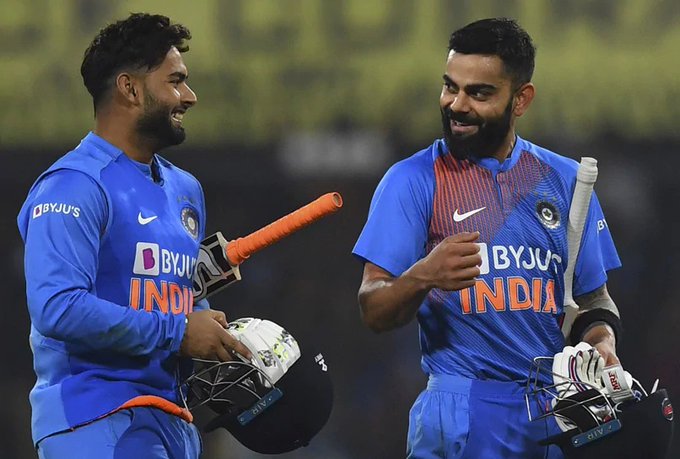
India beat Sri Lanka 7 wickets in Indore India beat Sri Lanka by seven wickets in Indore. Virat Kohli hit an unbeaten 30 as India ...
-
Finland voice for peace in ME, Iraq,Iran On Tuesday 7 January 2020, the Finland President of the Republic and the Ministerial Committee...
-
WorldEnvironmentDay Celebration in New Delhi 5 06 2014 Shri @ Prakashjavdekar releasing books on Environmental Issues at # WorldEn...
-
Academia in Reverse osmosis or In disorder? MAY 28, 2016 Sagar Media Inc HEADLINES PHOTOS WORLD BUSINESS ENVIRONMEN...


